A new form of capitalism: The Influencer Culture | Al Jazeera Untangles


Channel: Al Jazeera English
Uploaded by Al Jazeera English on 20250821
Categories: News & Politics
Tags: Mental Health, Social Media, Technology, Capitalism, Influencer Illusion, Influencer, Influencer Market, Influencer Culture, Digital Media, Engagement, Algorithms, Influencer Economy, Brand Me, Fame, Explainer, Al Jazeera Untangles, Al Jazeera, Al Jazeera English, Al Jazeera English Live, Documentary, Full Documentary, Curated Persona, Followers, Influence
Fame is just a post away, or so it seems. Brand Me delves into a culture driven by likes, followers, and curated personas. This episode explores the emotional toll of living life for the algorithm, and asks what it really means when everyone is performing, and everyone wants to be watched. #aljazeera #capitalism #influencer #in

A new form of capitalism: The Influencer Culture | Al Jazeera Untangles

This Al Jazeera English documentary explores the dark side of the modern creator economy, tracing its history, its psychology, and how it has evolved into what experts call online creator capitalism.

Below is a detailed breakdown of the main concepts, statistics, structural mechanisms, and real-life examples discussed in the video.

Key Concepts & Definitions

Online Cr
Image for chunk 1

eator Capitalism / Attention Economy: A system where human identity, vulnerability, and personal moments are packaged as monetizable assets.

Context Collapse [06:23]: A psychological term describing the blurring boundaries between public and private, real and performative lives, making creators unsure of who they are actually presenting themselves to.

Algorithmic Self-Optimization [13:18]: The behavioral shift where creators actively modi

Image for chunk 2

fy their content, delivery tone, timing, and even personality traits to match what they believe the platform's machine learning algorithm rewards.

Social Media Contingent Self-Esteem [20:12]: A term coined in a 2024 study (published in the Cyberpsychology journal) where an individual's sense of self-worth is entirely tied to the metric performance (likes, views, engagement) of their latest posts.

The Economic & Social Landscape

The video

Image for chunk 3

highlights a generational shift in career expectations, largely driven by stagnation in the traditional labor market:

The Labor Crisis & Gen Z: Facing high unemployment and stagnant wages, traditional 9-to-5 employment is increasingly viewed by Gen Z as unstable or unfulfilling [07:39].

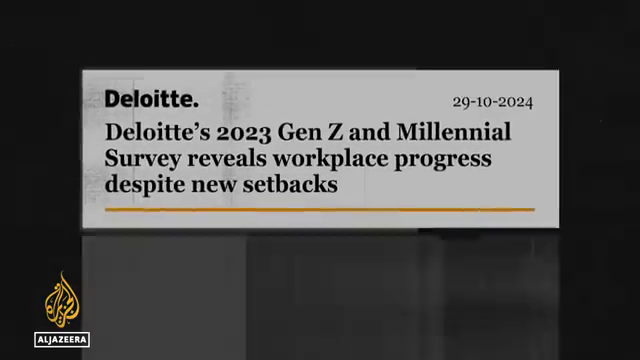
The Gig Economy: According to a Deloitte report, 46% of Gen Z workers in the US participate in the gig economy [08:02].

Influencer Ambition: A 2023 Mornin

Image for chunk 4

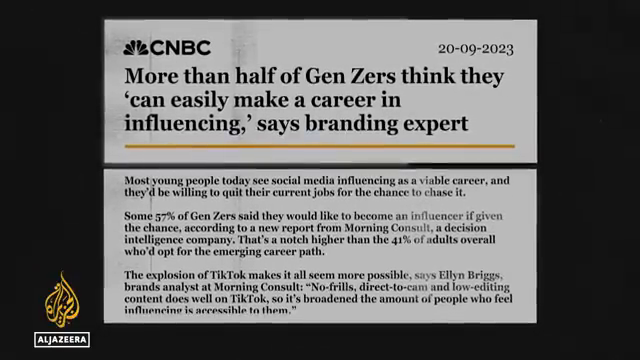
g Consult survey revealed that 57% of Gen Z individuals would choose to become influencers if given the opportunity, motivated by financial gain, flexibility, and creative freedom [06:55].

Growth of the Sector: The creator economy is projected to expand into a $520 billion industry by 2030 [08:38].

GEN Z EMPLOYMENT PREFERENCES (SOCIETAL SHIFT)

===================================================

[|||||||||||||||||||||||||||||| 57%] Choose

Image for chunk 5

to be Influencers (Morning Consult)

[|||||||||||||||||||||||| 46%] Participate in Gig Economy (Deloitte)

===================================================

Psychological Toll and Platform Architecture

The documentary focuses heavily on the design of these platforms, emphasizing that the negative mental health outcomes are not a result of "poor self-discipline" from creators, but are baked into the systems:

Dopamine Loop: Every like, comm

Image for chunk 6

ent, and notification triggers the same neurological dopamine pathways as a slot machine [06:41].

Constant Connectivity: A Pew Research Center study showed that 46% of US teens report being online "almost constantly" (up from 24% in 2014–2015) [09:22]. The driving force is not boredom, but the fear of losing visibility, falling behind, or hurting their page's standing.

Burnout Epidemic [15:52]:

In a survey of over 300 creators, nearly 80%

Image for chunk 7

reported experiencing social media burnout, and 66% said it harmed their mental health.

On Instagram, 71% of creators reported burnout, with half classifying it as "significant."

The Mechanism of Content Homogenization

The lack of algorithmic transparency means platforms adjust their distribution algorithms hundreds of times a day [13:28]. To protect their livelihoods, creators attempt to reverse-engineer their output, resulting in:

The

Image for chunk 8

Homogenization of Aesthetics [13:43]: Creators copy identical angles, video styles, and speaking tones, causing different creators to look and sound virtually the same.

The Amplification of Extremes [14:52]: Algorithms prioritize highly engaging content, which often translates to toxic or sensationalized material. A UCL study found that TikTok's algorithm increased the delivery of misogynistic content to teens from 13% on day one to 56% b

Image for chunk 9

y day five [14:52]. Body image issues, political outrage, and trauma-baiting are similarly elevated because "outrage is king."

Case Study: Madeline Georgetta [16:55]

To illustrate the human cost of the creator treadmill, the video profiles fitness influencer Madeline Georgetta:

Madeline's "Idealized" Life The Algorithmic Trap The Aftermath

+----------------------------+ +--------------------------+ +------

Image for chunk 10

--------------------+

| • Over 1 million followers | | • Stricter dieting | | • Disordered eating |

| • Lucrative brand deals | --> | • Focus on smaller body | --> | • Body dysmorphia |

| • Thriving fitness brand | | • "That girl" energy | | • Severe mental burnout |

+----------------------------+ +--------------------------+ +--------------------------+

Image for chunk 11

|

v (She Decides to Pivot)

+--------------------------+

| • Anti-diet culture advocacy|

| • Body neutrality |

| • Algorithmic Penalty | --> [Followers & Brand Deals Ghosted]

+----------------

Image for chunk 12

----------+

When she chose to prioritize her well-being and pivot her content toward body neutrality, the algorithm stopped recommending her videos. Because "healing doesn't trend," her brand deals disappeared and her platform shrank, highlighting how the system penalizes authentic recovery in favor of structured toxicity.

Alternatives & Finding Real Connection

While platforms like YouTube, Instagram, and TikTok state that their monetizat

Image for chunk 13

ion models empower creators (with YouTube paying out over $70 billion to the creator economy over three years [21:58]), the documentary advocates for structural and behavioral shifts:

Alternative Platform Architecture [21:14]: Smaller, community-focused or subscription-based platforms like Patreon or Discord reduce burnout by focusing on deeper, intimate connections with a dedicated group of followers rather than chasing mass algorithmic

Image for chunk 14

scale.

Decoupling Self-Worth [20:47]: True healing requires creators to separate their personal identity from their online metrics.

Prioritizing Offline Intimacy [24:16]: Building emotional resilience happens through offline vulnerability, real-world experiences, and genuine human bonding that cannot be commodified or reduced to a click-through rate.

A new form of capitalism: The Influencer Culture | Al Jazeera Untangles

Al Jazeera Englis

Image for chunk 15

Viewer Discussion & Comments

@aljazeeraenglish
Thanks for tuning in. In the fourth episode of Al Jazeera Untangles, we explore the emotional toll of living life for the algorithm, and ask what it really means when everyone is performing, and everyone wants to be watched. We'd love to hear your thoughts in the comments below.
@Darcyfitzwill
10 years ago when someone says 'i m a creator', it inspired me a lot. Now I just run away when someone says the same.
@Aband0n.TV_00
“Scrolled 5 lives” is such a great way to put this.
@asefkabir3256
This is the wildest version of capitalism. Everyone is selling themselves.
@the.otheropinion
I don't have facebook, instagram, X , tik tok Alhamdulillah. Its been better, also i have deactivated my notifications for almost 2 years now. I am focusing on watching long formal content and reading books.